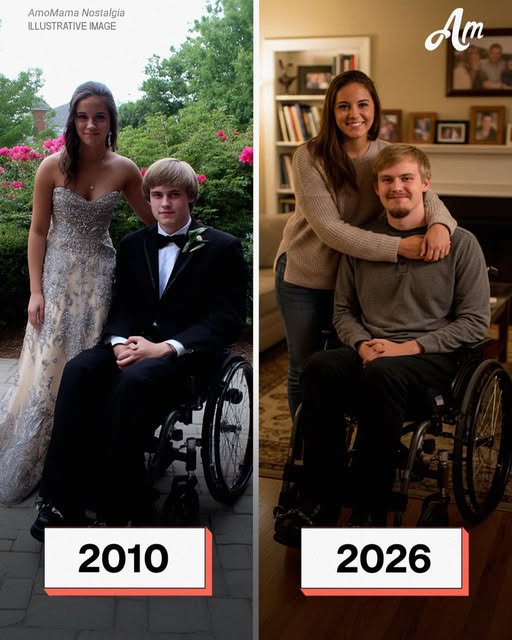
When my husband Daniel became paralyzed, I believed love meant staying no matter what.
At the time, we had been married for fourteen years. We had two children, a modest house in Ohio, and the kind of ordinary life that felt comforting in its predictability. Daniel coached our son’s baseball team on weekends. Our daughter followed him around constantly, convinced her father could fix absolutely anything.
Then one rainy November evening, everything changed.
Daniel was driving home from work when a truck lost control on the highway and slammed into his car. I still remember the hospital hallway smell — antiseptic and cold coffee — when the surgeon finally walked toward me with exhausted eyes.
“He survived,” he said carefully.
But the spinal damage was severe.
Daniel would never walk again.
The months after the accident blurred together into surgeries, rehabilitation centers, medication schedules, insurance paperwork, and sleepless nights. At first, everyone rallied around us.
Friends brought casseroles.
Neighbors offered help.
Family promised support.
But tragedy changes relationships in ways people rarely admit out loud.
Eventually, life moved forward for everyone else while ours remained frozen.
Daniel fell into a deep depression after coming home from rehab. The man who once filled every room with laughter barely spoke anymore. He refused physical therapy some days. Other days, he exploded in anger over tiny things.
I understood why.
Losing independence changes people.
So I stayed patient.
I became everything at once:
Wife.
Caregiver.
Breadwinner.
Nurse.
Mother.
I woke up at 5:00 every morning to help Daniel bathe and dress before getting the kids ready for school and rushing to my nursing job at the clinic. Then I came home to cook dinner, organize medications, clean the house, pay bills, and help Daniel through another night of frustration and humiliation.
Years passed that way.
Slowly, pieces of my old life disappeared.
Friends stopped calling because I canceled plans too often.
My relationship with my sister became strained after missing birthdays and holidays repeatedly.
Even my children started pulling away emotionally.
Not because they didn’t love me.
Because I was never fully present anymore.
Everything revolved around survival.
One evening, my daughter Emma quietly asked me:
“Mom, do you love Dad more than us?”
That question nearly destroyed me.
But honestly?
I understood why she asked.
Every decision in our household centered around Daniel’s needs. Vacations disappeared. Family outings became complicated. Conversations constantly revolved around appointments, medications, wheelchair repairs, or insurance battles.
Meanwhile, I stopped existing entirely outside caregiving.
I cut my hair short because long hair took too much time.
Stopped buying clothes for myself.
Stopped reading books.
Stopped painting, something I once loved deeply.
My entire identity became keeping Daniel alive and comfortable.
And for years, I believed sacrifice was proof of love.
Then, twelve years after the accident, something happened that changed everything.
It was late.
I had fallen asleep on the couch after cleaning the kitchen when I woke up thirsty around midnight. As I walked toward the hallway, I heard voices coming from Daniel’s office.
At first, I assumed he was watching television.
Then I realized he was talking on the phone.
Laughing, actually.
I froze because I hadn’t heard that version of his laugh in years.
Before I could announce myself, I heard him say something that stopped me cold.
“She’ll never leave me,” he said casually.
Silence filled my chest instantly.
Then he laughed again.
“Come on, Karen. You think a woman gives up her entire life for twelve years and suddenly walks away? She’s too loyal for that.”
My hands started shaking.
I stood frozen in the dark hallway listening to my husband speak about me like I was furniture.
Like I was predictable.
Permanent.
Trapped.
Then came the sentence that truly shattered me.
“Honestly, half the time I don’t even think she remembers who she used to be.”
The call ended a few minutes later.
I walked quietly back to the couch and sat there until sunrise staring at nothing.
For twelve years, I believed we were surviving tragedy together.
But suddenly, I realized something devastating.
Daniel had adjusted to my sacrifice so completely that he no longer saw it as sacrifice at all.
It had simply become expected.
The next morning, I looked at myself in the bathroom mirror for a very long time.
I barely recognized the exhausted woman staring back.
Not because I regretted caring for him.
Because somewhere along the way, I abandoned myself completely.
That realization changed something fundamental inside me.
For the first time in over a decade, I started asking difficult questions.
Why was I carrying everything alone?
Why had everyone accepted my exhaustion as normal?
Why did caring for someone else require erasing myself entirely?
And most importantly:
What kind of example was I showing my children about love?
A month later, I made the hardest decision of my life.
I hired a professional in-home caregiver three days a week.
Daniel was furious immediately.
“We can’t afford that.”
“We can,” I replied calmly. “It just means we stop pretending I’m a machine.”
That was the first boundary I set in years.
Then came more changes.
I started attending therapy.
I reconnected with old friends.
I took Emma to lunch alone every Saturday.
I began painting again.
At first, the guilt nearly consumed me.
Every moment spent on myself felt selfish after years of conditioning myself to believe everyone else’s needs mattered more.
But slowly, something unexpected happened.
I started feeling alive again.
And strangely, our marriage improved too.
Not instantly.
Not magically.
But honestly.
For years, Daniel and I had built our relationship entirely around dependency and survival instead of partnership. Once I stopped silently carrying everything alone, we finally started having real conversations again.
Painful ones.
Necessary ones.
Daniel eventually admitted something difficult too:
My constant sacrifice had filled him with guilt for years. Instead of confronting it, he buried himself in bitterness and denial because it felt easier than facing how much both of us had lost.
Healing didn’t happen overnight.
But honesty finally entered our marriage again.
Looking back now, I understand something I wish more people talked about openly:
Caregiving can quietly consume a person’s identity if boundaries disappear completely.
Loving someone through illness or disability is honorable. But love should not require total self-destruction.
You cannot pour endlessly from an empty soul.
Supporting another person matters.
Compassion matters.
Commitment matters.
But your own life matters too.
And sometimes the bravest thing you can do is remember that you are still a person outside of everyone else’s needs.